Consumer Rights
Extended Warranties and What You Might Be Buying Twice
The cover offered at the till overlaps with rights the law may already give you. Working out where the overlap sits is the entire question.

What follows is an argument about how paid cover relates to existing legal protection, and about where the received version of it stops being true.
The argument in brief
- Legal rights against a seller exist independently of any paid cover.
- Paid cover is defined by its policy wording rather than by law.
- Overlap and exclusions are where the value of a policy is decided.
Three different things with similar names
A manufacturer's guarantee is a voluntary promise from the maker, offered on whatever terms the maker chooses to set. Legal rights against the seller arise from the sale itself and exist in most systems whether or not any guarantee was given.
An extended warranty is a separate product, usually sold for money and often underwritten as a form of insurance. The three sit alongside each other, and a fault may fall within one, two, three or none of them at any given moment. Confusing them is easy because sellers frequently use the same vocabulary for all three at the point of sale.
Why overlap is the central question
Where legal rights against the seller are strong and long-lasting, paid cover for early failures adds relatively little. Where those rights are short or narrow, the same policy may cover a genuine gap and be worth its price.
As a general position, the strength and duration of statutory protection differs greatly between countries, which is why the same product has different value in each. Some jurisdictions require sellers to explain existing legal rights before selling additional cover, precisely because of this overlap. Anybody weighing such a policy needs to know their local position first, and that is not something a general article can supply.
What the policy wording actually does
Cover is defined by exclusions as much as by inclusions, and the exclusions are where most declined claims originate. Accidental damage, wear, cosmetic damage and consumable parts are commonly excluded or treated under separate limits.
Many policies impose obligations on the holder, such as servicing requirements or notification periods after a fault appears. Cover may be limited to repair rather than replacement, or capped at a depreciated value rather than the purchase price. Reading these terms before a claim rather than during one is the only point at which the information is useful.
Who is actually behind the promise
The retailer selling a warranty is often acting as an intermediary for an insurer or an administration company. That matters when the retailer stops trading, because the cover may or may not survive depending on how it was structured.
It also affects who handles a claim, who resolves a dispute and which complaint schemes are available. Regulated insurance products may carry protections that unregulated service contracts do not, and the classification is technical.
Which category a particular product falls into is a question about local regulation rather than about the marketing material.
Cancellation and renewal
Many such policies renew automatically, and the renewal price is frequently higher than the original offer. Cancellation rights shortly after purchase exist in various jurisdictions, though the periods and conditions differ considerably. Refunds on mid-term cancellation may be pro-rated, subject to fees, or unavailable altogether depending on the wording.
Read strictly, cover attached to a product usually ends if the product is sold, unless the policy expressly permits transfer. These mechanics are contractual, which means the document rather than any general principle determines the outcome.
Making a claim
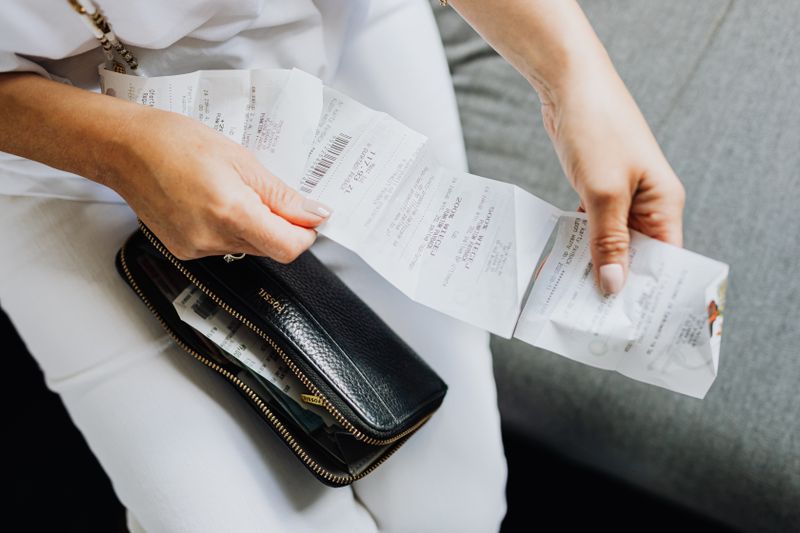
Claims are usually notified within a defined window after the fault appears, and late notification is a common ground for refusal. Proof of purchase for both the item and the policy is normally required, and the two documents are often stored separately. Where a claim is declined, the internal complaints route and any external scheme are the ordinary next steps.
In the wording, a parallel claim against the seller under general consumer law may remain available regardless of the policy outcome. Where a substantial sum turns on that parallel route, it is a matter for a qualified adviser in the buyer's own jurisdiction.
The takeaway
The value of paid cover depends entirely on what the law already gives you where you live. General information rather than legal advice.
Most disputes are settled by whoever kept the better record.
Questions readers ask
Does buying a warranty replace my rights against the shop?
No, since legal rights arising from the sale generally continue alongside any paid cover. A policy adds a contractual route rather than removing an existing one.
Why was my claim declined when the item clearly broke?
Declines usually rest on an exclusion or a condition in the policy rather than on the fault itself. The wording is what defines the cover.
Also by Tanmay Bhalerao
- What Fit for Purpose Means When a Product Disappoints YouConsumer Rights
- Buying a Service Is Not the Same as Buying a ThingConsumer Rights
- Deposits, Prepayments and What Happens If a Trader Goes UnderConsumer Rights
- Why a Tenancy Deposit Is Held Rather Than PaidProperty & Tenancy